
LPR Parking Systems — License Plate Recognition
An LPR parking system uses AI-powered license plate recognition cameras at entry and exit to turn a vehicle's plate into a digital parking credential — opening barrier gates for registered parkers automatically, logging plates for transient vehicles, and enabling pay-by-plate payment without paper tickets or physical cards.
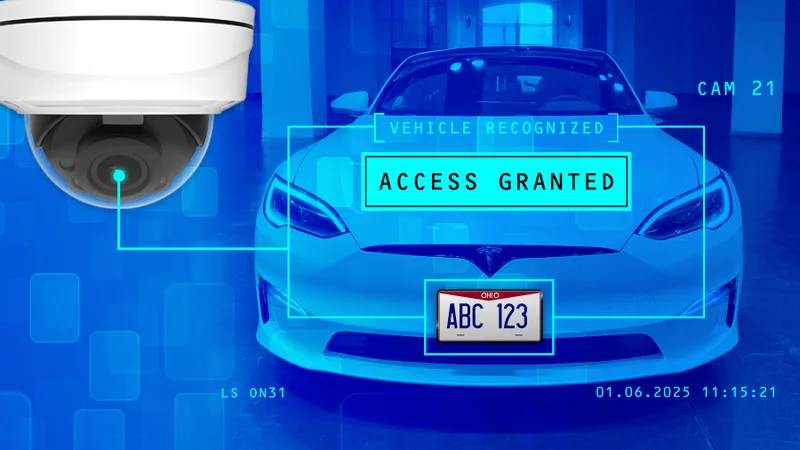
License plate recognition parking technology has reached the point where the plate itself is the ticket, the credential, and the payment key — all at once. Parking BOXX integrates AI-powered LPR cameras with barrier gates, payment kiosks, and CloudEASE cloud software to deliver complete plate-based parking access for gated garages, ungated surface lots, and multi-facility operations across North America.
LPR serves as the primary entry layer — registered plates open the gate automatically, no ticket required. Unregistered vehicles receive a ticket as the reliable fallback, so every vehicle has a path forward. 99%+ read accuracy. Pay-by-plate. All managed from a single CloudEASE dashboard. Parking Made Easy®.
LPR is Great — Until It Isn't. Here's What to Plan For.
No LPR system achieves 100% read accuracy in a real-world parking environment. A well-calibrated system running Parking BOXX cameras will hit 99%+ — which sounds excellent, but in a 500-vehicle-per-day facility that remaining 1% gap still means 5 vehicles per day that need a backup path. In a camera-only system with no fallback, those vehicles can't enter, can't exit, or simply drive away without paying.
Field data across installations consistently shows that camera-only parking systems — where LPR is the only mechanism for entry and exit with no intercom and no backup ticket option — can lose up to 40% of potential revenue from unpaid exits when failed reads create a dead-end experience for the driver. Parking BOXX's recommendation is not to avoid LPR, but to build the system correctly around it.
 Actual LPR System Photo
  #1 — After a Light Snow. How many days of snow does your area have?
 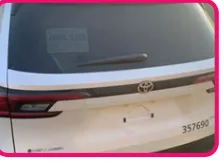 #2 — Missing Plate
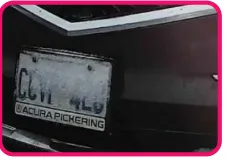
 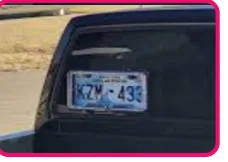 #3 — Plate in Unexpected Position
 Common LPR Failure Modes
Even with 20+ ft of approach clearance, vehicles with rear-only plates, temporary dealer tags, damaged plates, or non-standard plate formats from out-of-state will generate failed reads at higher rates than standard in-state plates.
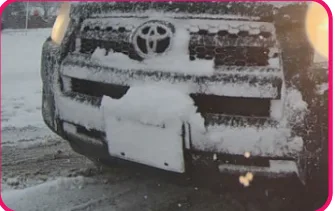
Snow buildup, mud, road grime, direct sun glare, and underground garage lighting conditions can all degrade read quality — even with integrated IR illumination. Seasonal sites in northern climates must plan for this.
Plate OCR engines can confuse visually similar characters: O/0/Q/D, 1/I/L, S/5, B/8. Parking BOXX systems support N-1 and N-2 accuracy modes and allow character group customization per site to reduce these substitution errors.
Camera hardware failures, network outages, and software resets happen. Without a fallback at the lane, any hardware event becomes a facility-wide access stoppage.
Drivers unfamiliar with LPR-based entry — especially at older demographics or tourist-heavy facilities — may not know what to do when the gate doesn't open. Clear signage plus a backup ticket path eliminates this confusion.
Ungated pay-by-plate lots rely on third-party enforcement to collect revenue from non-payers. Without sufficient enforcement coverage, payment compliance drops — and a camera-only system with no barrier gate has no mechanical way to stop a non-paying driver. CloudEASE sends paid plate data via API to your enforcement provider.
The Layered System Solution
Parking BOXX recommends a layered system approach: LPR cameras as the primary read mechanism, paired with at least one backup path for every failure mode. The most effective configuration for a gated facility combines:
- 1LPR CamerasAt every entry and exit lane — the primary credential for 99%+ of readable vehicle plates
- 2Ticket DispensingAt entry, visitors receive a ticket as a fallback credential. This may also be used for validation or on-line parking payment or payment at a walk-up kiosk or point-of-sale. At exit, the ticket is the fallback credential, not the default.
- 3Monthly Parkers & ReservationsMonthly parkers and reservations may use LPR as primary. If they have a rental car or using a spouse's vehicle, then the RFID credential may be used as back up.
- 4VoIP IntercomsAt each lane — drivers who are stuck can reach an operator without leaving their vehicle. The operator may remotely send amounts due to each station, look up license plates and tickets, and remotely open the gate arm.
- 5Barrier GatesThe mechanical enforcement layer that ensures vehicles without a valid credential cannot exit without paying
This combination delivers near-perfect transaction capture, zero abandoned exits, and a documented service record for every vehicle that enters. It also means LPR read errors result in a minor inconvenience — the driver takes a ticket — rather than a stuck lane and a frustrated customer. See our complete smart parking systems for layered system configurations from Parking BOXX.
How LPR Cameras Work in Parking
AI LPR cameras in parking applications combine high-resolution imaging with artificial intelligence to read license plates accurately under real-world conditions. The process happens in milliseconds: the camera detects an approaching vehicle, captures one or more images of the plate area, and an onboard or server-side AI engine performs optical character recognition to extract the plate number.
Infrared illumination built into the camera housing enables reliable plate reads at night, in underground garages, and during low-light conditions without relying on ambient lighting. The system reads plates on vehicles traveling at speeds up to 30 mph, making it effective for both stop-and-go entry lanes and free-flow drive aisles.
Once the plate is read, the data is sent to CloudEASE where it is matched against authorized plate lists, active parking sessions, or payment records. The entire read-and-match cycle completes in under two seconds. Parking BOXX supports dual-camera configurations that capture both front and rear plates simultaneously, and multi-lane setups allow a single CloudEASE instance to manage LPR across every entry and exit point in the facility.
LPR Layered Entry and Exit
LPR serves as the primary entry layer — registered plates open the gate automatically; unregistered vehicles fall back to ticket dispensing. At entry, the LPR camera reads the vehicle plate and CloudEASE creates a session record — no button pressed, no window rolled down. For monthly parkers and pre-authorized vehicles, the gate opens automatically with no further action required. For transient vehicles the camera cannot match, a backup ticket is dispensed so every vehicle has a path forward. At exit, the camera reads the plate again, matches it to the entry record, calculates the parking duration, and presents the fee on the exit kiosk screen. Drivers with a backup ticket pay at the kiosk; pre-authorized plates exit without stopping.
Pay-by-Plate for Ungated Lots
Pay-by-plate is the dominant model for ungated LPR parking. The camera logs the plate when the vehicle enters. The driver pays using a mobile app, web link, or kiosk — entering their plate number as the lookup key. CloudEASE links the payment to the plate and marks the session paid. For ungated lots, no exit hardware is needed at all — just cameras and a payment method. This makes pay-by-plate one of the most cost-effective configurations available because it eliminates entry hardware, ticket stock, and mechanical gate components entirely.
Third-Party Enforcement Integration
For ungated surface lots using the Smart Parking Meter, CloudEASE can send paid plate data via API to third-party enforcement systems. When an enforcement officer scans a plate on patrol, they receive real-time confirmation of whether a valid paid session exists — without Parking BOXX providing enforcement services directly. The API integration connects to the enforcement provider of your choice.
Camera Installation & Mounting Guidelines
Proper LPR camera positioning is the single most controllable factor in achieving consistent plate read rates. Cameras installed outside the recommended parameters will experience reduced accuracy regardless of onboard AI capability. The following specifications are derived from manufacturer data and validated across Parking BOXX installations across North America.
Front-Facing Camera Specifications
Front-facing cameras are standard for gated entry lanes — the vehicle approaches the camera directly as it enters the lane, presenting the front plate at a predictable angle and distance.
Rear-Facing Camera Configurations
Rear-facing LPR cameras are recommended in four specific scenarios: (1) facilities in U.S. states or Canadian provinces where only a rear plate is required by law — no front plate to capture at entry; (2) exit lanes where the vehicle's front faces away from the camera position; (3) dual-capture setups that read front plate at entry and rear plate at exit simultaneously for maximum verification confidence; and (4) enforcement vehicles or fixed enforcement poles scanning parked cars from behind.
Parking BOXX supports rear-facing camera configurations in all gated system builds. In exit lanes, the camera is typically mounted at the gate arm structure and oriented to capture the rear plate as the vehicle approaches. Dual-capture configurations — front camera at entry, rear camera at exit — are recommended for high-volume facilities processing more than 200 vehicles per day, as they provide an independent read at each control point and reduce the risk of a missed plate causing an access dispute.
Rear-facing cameras use the same mounting parameters as front-facing: 1.0 m – 1.5 m (3.3 – 4.9 ft) mounting height, horizontal tilt 0°–15°, width offset 0–1.0 m, vertical pitch 0°–15°. The camera faces the approaching vehicle rear from the gate structure or a dedicated post at the exit lane position.
CloudEASE LPR Integration
CloudEASE is the cloud parking management software platform that ties every LPR camera, gate, and payment device into a unified system. All plate reads flow into CloudEASE in real time, creating a centralized record of every vehicle that enters, parks, pays, and exits across all connected facilities.
Operators manage authorized plate lists directly in CloudEASE. Monthly parkers, employee permits, VIP reservations, and validation groups are configured by plate number — no physical cards or credentials to distribute. When a registered plate is read at entry, CloudEASE matches it instantly and sends the gate-open command. Changes to the authorized list take effect immediately across all lanes and locations.
CloudEASE also powers the analytics layer for LPR parking. Operators can view plate-level transaction histories, identify frequent visitors, track average dwell times, and generate occupancy reports based on camera data. Remote management means operators can add or remove plates from authorized lists, adjust rate rules, review plate images, and respond to intercom calls from any browser — no on-site visit required.
For multi-facility operators, a single CloudEASE dashboard provides visibility into LPR performance across every location. Revenue, occupancy, and transaction data all roll up into one reporting view without requiring separate logins or separate systems for each property.
Frequently Asked Questions
What is an LPR parking management system?
What is an AI LPR camera parking system?
How accurate are LPR cameras in parking applications?
Can LPR cameras work with barrier gates?
What is pay-by-plate parking and how does it work?
Can the Smart Parking Meter integrate with third-party enforcement systems?
Ready to Add LPR to Your Parking Facility?
Parking BOXX manufactures complete AI LPR camera parking systems — cameras, controllers, barrier gates, payment kiosks, and CloudEASE software — with factory-direct pricing and full installation support across North America. One vendor. One warranty. Parking Made Easy®.